Author: rogermagnusson
-

Innovation down under 2: tobacco endgame strategies in New Zealand (the UK & USA)
A recent post reviewed the tobacco control innovations introduced into Australia through the Public Health (Tobacco and Other Products) Act 2023 (Cth). New Zealand was legislating world-leading innovations of its own around the same time, although their purpose and design contrast sharply with tobacco control measures in Australia. If Australia’s legislation is best seen as…
-
Rethinking Australia’s tobacco revenue plunge
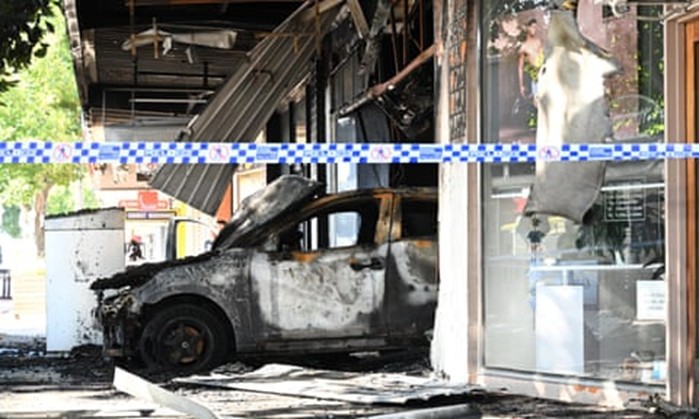
This post was written by Neil Francey, Research Affiliate, Sydney Health Law In an article in The Weekend Australian (13-14 September 2025), Associate Editor Eric Johnston argues that there should be a rethink of tobacco customs and excise duty, due to the scale of illicit trade in tobacco. Johnston’s piece was prompted by burnt-out tobacco…
-

Could a national tobacco retail licensing scheme help to combat illicit tobacco in Australia?
High tobacco excise has fueled a costly black market, creating what one economist calls a ‘dumb trifecta’ of crime, poorer health, and lost revenue. With inconsistent state laws seemingly failing, this post explores if a single, national tobacco retail licensing scheme could be a more effective solution.
-

Innovation down under 1: what has Australia been doing in tobacco control recently?
As discussed in another post, there has been so much vaping law reform in Australia over the past couple of years that it’s easy to overlook significant tobacco control law reforms. Since 2023, Australia has had a flagship, national tobacco control Act. The Public Health (Tobacco and Other Products) Act 2023 [PHTOP Act] consolidated previous…
-

Tracing Australia’s vaping controls back to source
The regulation of vaping and e-cigarettes in Australia underwent significant reform during 2023-2024. This post, prepared for health law students, traces some of the most significant reforms back to their legislative sources. Broad overview Australia’s regulatory framework for vaping has three components. First, vaping goods are regulated under the Therapeutic Goods Act 1989 (Cth), under…
-

Paradise at risk: recommendations to control tobacco and alcohol industry interference in Pacific Island Countries and Territories
This post was written by Matthew Catanzariti, Jessica Heaney and Oscar Loughnan Tobacco and alcohol represent significant threats to public health. The businesses that manufacture, distribute, and market these products to the public have irreconcilable interests to those that attempt to improve and protect public health. These businesses use coercive techniques, such as lobbying, tactical…
-

Teenagers refusing life-saving cancer treatment for religious reasons
Should courts allow minors (<18 years) to refuse life-saving medical treatment for religious reasons? My students don’t all agree that respect for the personal autonomy of a minor who fully understands the consequences of their decision, is all that matters. But many of them do.
-

Legislative restrictions on irreversible surgery on intersex children in the ACT: An unsurprising development?
Over a number of decades, personal autonomy has become a dominant value in Australian medical law. Yet, as new legislation restricting intersex interventions illustrates, the content of personal autonomy is subtly changing.
-

Vaping law reform: Protecting the Pacific
Vaping is on the rise and governments are scrambling to respond. Guest authors Sophia Bleakley, Clare Gim and Helen Zhang analyse the issues.
-

Strengthening Australia’s smoke and vape-free beach culture (north, and south, of the border)
Keeping beaches smoke and vape-free severs the link between relaxation and nicotine addiction. It says you don’t need to harm your body to enjoy yourself.
-

Vaping law reform: New South Wales in a federal context
There is a lot of vaping-related law reform activity going on in Australia at the moment. This (long) post reviews NSW vaping laws and provides a baseline for understanding the changes that are underway, both at NSW (State) and Commonwealth level. Background The failure to enforce nicotine control laws, together with ludicrously low penalties, have…
-

Proving the “competent professional practice” defence in NSW: Is the law any clearer after Dean v Pope?
Background A health practitioner who is sued for negligence in NSW will avoid liability under s 5O(1) of the Civil Liability Act 2002 (NSW) “if it is established that the professional acted in a manner that (at the time the service was provided) was widely accepted in Australia by peer professional opinion as competent professional…
-

Australia’s vaping train wreck: The Butler Plan to fix it and the devil in the detail
This post was written by Neil Francey, Research Affiliate, Sydney Health Law Australia’s Vaping Train Wreck Commonwealth Health Minister, Mark Butler MP, has announced that the Albanese Government is taking strong action to reduce smoking and stamp out vaping – particularly among young Australians – through stronger legislation, enforcement, education and support. This follows public…
-

Contraventions of the Australian Consumer Law in the promotion of e-cigarettes
This post was written by Neil Francey, Research Affiliate, Sydney Health Law In an article in The Conversation, “Sex and lies are used to sell vapes online. Even we were surprised at the marketing tactics we found”, published on 6 March 2023, Curtain University Professor Jonine Jancey notes that e-cigarettes are not harmless; they contain…
-

Pokies: joyless, nasty, and on the way out?
This post gives a shout out to hotel owners who are ditching their pokies to create a more family-friendly atmosphere. And to executives of registered clubs who are resisting pressure to make gambling the heart and sole of the business plan for registered clubs: see here and here. Let’s be honest: pokies (also known as…
-

Global health law short courses
If you live on planet earth, you have a stake in global health law. This post draws attention to two upcoming short courses taught by global health law colleagues in Europe. Summer in Geneva? The University of Geneva will be hosting a course on International Law, Global Health and Global Justice on June 26-30, 2023.…
-

Regulating harmful cross-border advertising: can it be done?
How do governments prevent their citizens from being exposed to harmful online advertising which originates outside of their jurisdiction? Such advertising is referred to as cross-border advertising. Advertisers have taken advantage of a digitised, interconnected world to reach broad audiences (including children) across national borders.
-

Alcohol causes 3 million deaths each year. Eliminating conflicts of interest is vital to bringing this number down
Alcohol causes three million deaths each year, including 13.5% of deaths amongst those aged 20-39 years. But the personal and economic costs of alcohol-related harm are not met by the alcohol industry.
-

Another step forward for the Pacific Legislative Framework
Pacific Island Countries and Territories have some of the world’s highest rates of health risks. In response, the Public Health Division of the Pacific Community (SPC) has been driving an initiative for tackling the key risk factors: the Pacific Legislative Framework.
-

Closing the Gap and health governance reform: a brief review
The National Agreement on Closing the Gap is an ambitious all-of-government framework for improving the health and welfare of Australia’s first nations peoples. This post briefly reviews the Agreement and considers its significance as an example of health governance reform.
 Sydney Health Law