
This post was written by Neil Francey, Research Affiliate, Sydney Health Law
Criticisms of high tobacco excise
Interviewed on ABC’s Budget Special this year, respected economist Chris Richardson described Australia’s tobacco excise policy as an “epic fail”.
According to Richardson, the huge increase in tobacco excise tax has resulted in a “dumb trifecta” comprising:
- More organised crime: the black market has been “rocket fuel” for organised crime, because penalties are so low.
- Poorer health: because the availability of black market cigarettes has made the cost of smoking much cheaper;
- Less excise revenue: the black market is costing the government more than an estimated $10 billion per year.
Richardson contends indexation of tobacco excise should at least be paused until enforcement catches up.
Prior to the 2025 federal election, two Coalition MPs argued that the tobacco excise should be reduced, while more recently, Labor NSW Premier Chris Minns has called for a review – questioning whether investigating illegal tobacco sales represents the best use of NSW police resources.
For their part, tobacco control advocates – as a group and individually – have staunchly defended maintaining the excise tax at its current high level. The rationale for this approach is that:
The pricing of cigarettes and other tobacco products is the most effective mechanism for tobacco companies to both maintain consumer demand and protect returns to shareholders. And, because taxes make up a substantial proportion of the price of tobacco products, and consumers are responsive to price changes, raising tobacco taxes is one of the most effective mechanisms for governments to reduce population consumption of tobacco.
Federal government policy
The question of resolving these competing views is somewhat moot since federal Health Minister Mark Butler MP has made it clear that the Commonwealth will not be reducing the price of tobacco, even by a pause in excise indexation.
The 2025 federal budget included an additional $156.7 million to combat trade in illicit tobacco: see here and here. Yet these investments are modest compared to the billions of lost revenue. And they include financial support to State and Territory agencies to enforce State and Territory laws.
Therein lies the problem and the possible basis for a new approach.
Although the Commonwealth has introduced offences for possession, sale and purchase of illicit tobacco, and established an Illicit Tobacco Taskforce, at the retail level tobacco licensing and sale is governed by State and Territory laws – and these laws vary significantly across the country.
Victoria’s licensing scheme won’t be enforced until February 2026, while in NSW, applicants who apply for a tobacco licence after 1 October 2025 must wait until it is approved before they can lawfully sell tobacco.
Criticism of tobacco licensing
Richardson pointed out that where tobacco retail licensing exists, the penalty for selling without a licence is a fine, not jail (although in Queensland, supply of illicit tobacco – as part of a business – does carry the penalty of imprisonment), and the level of fine varies considerably between different States and Territories.
For an individual, the fine ranges from an on the spot fine of $1000 in Western Australia to as much as $350,000 in South Australia.
Other inconsistencies between the different licensing regimes include:
- The entities to which a licence may be granted is restricted to individuals in Tasmania while in other States and the Territories it can include corporations and other forms of associations.
- All States and Territories prohibit tobacco sales to minors, but penalties, staff training and the permissibility of sales by minors vary widely.
- Restrictions on the location of price boards, and/or the proximity of products attractive to minors (such as lollies and/or toys) to the point of sale for tobacco exist in Western Australia, Tasmania and the Northern Territory but not otherwise.
- Tobacco vending machines are now banned in Victoria, South Australia, and the Australian Capital Territory, but permitted (in licensed venues) in the remaining jurisdictions.
- Online sales are prohibited in South Australia but not in other States or the Territories.
Quite apart from tobacco licensing laws, there are discrepancies between States and Territories in their implementation of “best practice” requirements for tobacco retailing, such as:
- Exclusion zones near schools.
- Excluded retailers, like retailers mainly selling lollies and toys or other items with appeal to minors.
- Inconsistency in requirements for training of tobacco product retailers.
Grounds for licence suspension or cancellation are also inconsistent across the various States and Territories, as is the process for licence suspension or cancellation.
Finally, the duration of a licence to sell tobacco products and the applicable fees vary considerably between the States and Territories:
- Generally a licence is valid for up to one year although in the Northern Territory the duration of the licence can be one, three or even five years.
- Tobacco retail licence fees range from a low of $242 in Western Australia to as high as $1,340 in Tasmania.
During a recent ABC TV investigation into illicit tobacco, a representative of the Master Grocers Association – an organisation with well-documented ties to Big Tobacco – lamented the high cost of tobacco retail licence fees, regardless of turnover, and the disproportionate level of enforcement relative to the size of the problem. A newsagent proprietor complained about falling sales due to illicit tobacco and the risk of fire-bombing, as rival criminal gangs fight over their turf. He said that once the new Victorian licensing laws came into effect he would cease selling tobacco, something the MGA spokesperson echoed.
Meanwhile, Lung Foundation Australia says accessibility is one of the major reasons people continue to smoke and has called for the sale of cigarettes and tobacco products to be banned from major supermarkets.
History of tobacco taxation and licensing in Australia
Since the passage of the Excise Act 1901 (Cth) and the Customs Act 1901 (Cth), the Commonwealth has imposed excise duty on Australian-made and customs duty on imported tobacco products.
Beginning in 1974, the various States sought to impose a fee on the sale of tobacco as part of a state-based licensing scheme.
A tobacco retail licence was recognized as a way of ensuring that tobacco retail businesses complied with tobacco control laws while also shifting the economic costs of enforcement back on retailers (not to mention raising additional revenue).
In New South Wales, the dollar value of the licensing fee doubled in real terms between 1976 and 1986. Between 1986 and 1996, it increased by a further 400%, with similar increases occurring in other States.
In these circumstances it became clear that the tobacco licensing fees charged by the states went beyond covering the administrative costs of the licensing schemes and had instead become an important source of state revenue. As a result, this aspect of the licensing schemes was invalid, since s 90 of the Constitution granted the Commonwealth the exclusive right to impose duties of customs and of excise, through the passage of laws with respect to taxation under s 51(ii) of the Constitution.
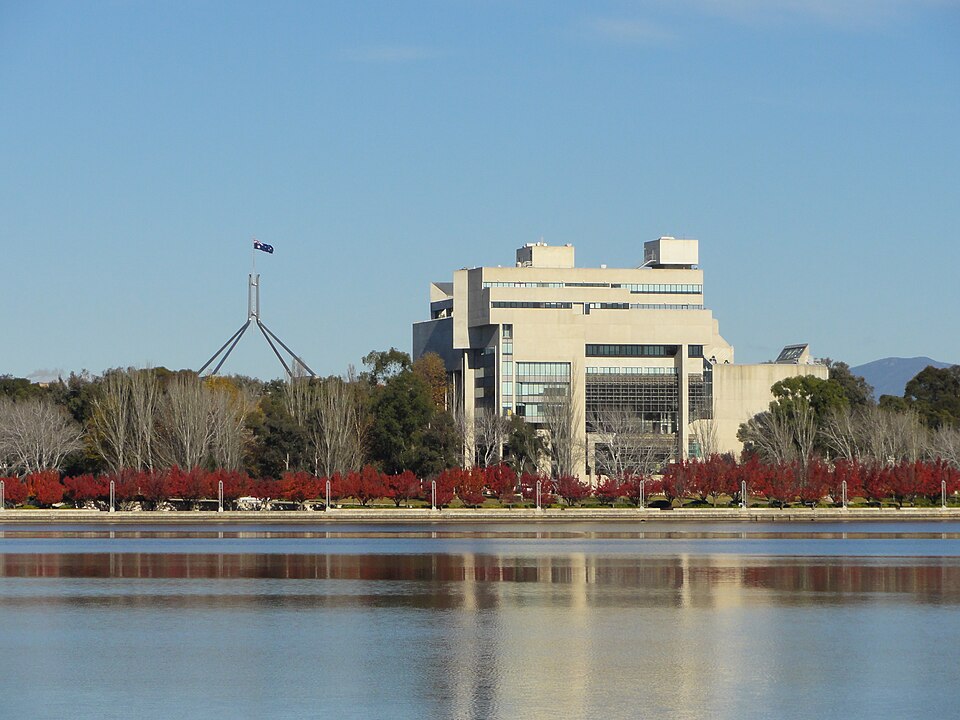
In 1997, in Ha v State of New South Wales, the High Court ruled that relevant provisions of the NSW Business Franchise Licenses (Tobacco) Act 1987 were invalid under the Constitution. By implication, similar laws in the other States (as well as comparable state business franchise fees on sales of alcohol and petroleum), were also invalid.
Between August 1997 and June 2000, the federal government collected additional excise duty equivalent to the amounts previously collected by the States and allocated that revenue to the States in compensation for the lost fees.
This maintained the revenue the States had previously enjoyed from the tobacco excise tax while preserving the objective of reduced consumption by keeping the retail price of tobacco products high.
In the 1999 election, the Coalition government campaigned on a tax reform package Tax Reform: Not a New Tax; a New Tax System under which the Commonwealth would levy and retain excise on tobacco at previous levels and impose a goods and services tax the proceeds of which would be divided among the States while the state tobacco licensing schemes would continue.
This created a disconnect between the entity benefiting from the tobacco excise (the Commonwealth) and the entities responsible for enforcing payment of the tobacco excise (the retailers licensed by the States)
The current problem and a possible solution
This disconnection appears to have contributed to the current dysfunctional state of affairs in which the States and Territories have many competing priorities for the use of their police resources and little incentive to address sales of black market tobacco, since these revenues go to the Commonwealth.
One solution could be to introduce a single national tobacco licensing scheme – which would include the introduction of “best practice” standards for regulating all aspects of the retail sale of tobacco products including rationalising the inconsistencies identified above.
Does the Commonwealth have legislative power to introduce a national tobacco licensing law?
Power to levy excise
The Commonwealth Parliament’s exclusive power to levy excise under s 90, its legislative power to make laws with respect to taxation (s 51(ii)), together with the incidental power in s. 51(xxxix) of the Constitution, should be sufficient to justify a national tobacco licensing scheme. After all, it is Commonwealth revenue being lost through the illicit sale of tobacco products and licensing is an aid to ensuring the excise taxes imposed are paid.
Power to implement international treaty obligations
Australia is a signatory to the World Health Organisation Framework Convention on Tobacco Control (FCTC), which states in Article 15:
- With a view to eliminating illicit trade in tobacco products, each Party shall:
(a) …;
(b) enact or strengthen legislation, with appropriate penalties and remedies, against illicit trade in tobacco products, including counterfeit and contraband cigarettes;
(c) …;
- Each Party shall endeavour to adopt and implement further measures including licensing, where appropriate, to control or regulate the production and distribution of tobacco products in order to prevent illicit trade. (underlining emphasis added)
In this case, the Commonwealth’s power with respect to external affairs contained in s 51(xxix) of the Constitution would justify the enactment of a national licensing scheme to combat illicit tobacco. Indeed, the FCTC obliges the Commonwealth (not the States), to do so – and other provisions in Article 15 reinforce this obligation.
Other FCTC obligations supporting a national tobacco licensing scheme
Part IV of the FCTC, which deals with measures relating to the reduction of the supply of tobacco, contains other provisions that could be implemented through a national tobacco licensing scheme.
For example, Article 16, which imposes obligations with respect to tobacco sales to and by minors, could provide the basis for national legislation governing this area.
Article 17 of the FCTC requires Parties, in cooperation with appropriate inter-governmental organisations, to support economically viable alternatives for tobacco workers, growers, and sellers. Recognising that a new national tobacco licensing scheme could cause detriment to some tobacco retailers; for example, by prohibiting tobacco sales close to schools, Article 17 could justify a “tobacco licence buy-back” similar to the nation-wide “gun buy-back” after the 1996 Port Arthur massacre.
Article 6 of the FCTC justifies price and tax increases to reduce the demand for tobacco. In 2018, the Conference of the Parties to the FCTC published Guidelines for Implementation of Article 6; these are supported by the WHO Technical Manual on Tax Administration, first published in 2010 and updated in 2021 as the WHO Technical Manual on Tobacco Tax Policy and Administration.
Other provisions of the FCTC affect non-excise related matters, notably:
- Article 7 Non-price measures to reduce the demand for tobacco
- Article 11 Packaging and labelling of tobacco products
- Article 13 Tobacco advertising, promotion and sponsorship.

Best-practice tobacco control measures in a national tobacco retail licensing scheme
There seems no reason why a national tobacco licensing scheme should not implement “best practice” tobacco control measures across a range of areas.
It could, for example, ban online sales in all States and Territories, not just in South Australia, something supported by the Commonwealth’s powers over posts and telegraphs under s. 51 (v) of the Constitution, which extends to other forms of electronic communications.
It could prohibit tobacco sales to minors – an obligation owed by Parties to the FCTC under Article 16 – supported by the external affairs power under s. 51 (xxix) of the Constitution.
Related to this, a national tobacco retail licensing scheme could prohibit tobacco sales from retail outlets close to schools or which sell lollies, snacks, toys and the like – supported by the incidental power contained in s. 51 (xxxix) of the Constitution.
Additionally, a national tobacco licensing scheme could address other inconsistencies and deficiencies arising under current tobacco excise tax arrangements. For example, it could require that all tobacco retail licensees must be natural persons, as distinct from a body corporate, so that the risk of imprisonment could function as a more effective incentive for compliance – as is the case in Queensland under s 161 of the Tobacco and Other Smoking Products Act 1998.
Drawing on the language of the Competition and Consumer Act 2010 (Cth), a national tobacco licensing scheme could also impose liability on persons who:
- aided, abetted, counselled or procured the contravention of tobacco licensing conditions;
- induced, whether by threats or promises or otherwise, the contravention of such conditions;
- was in any way, directly or indirectly, knowingly involved in, or party to, the contravention; or
- conspired with others to effect the contravention.
Finally, standardised licence fees across the country, imposed at a suitably high level, could act as a disincentive to stock tobacco products.
In lieu of a reduction in the level of tobacco excise or a pause in indexation, some tobacco retail licensees – such as those in proximity to schools – could return their licences and also be compensated under a tobacco licence buyback scheme.
If not directly supported by a specific head of Commonwealth legislative power, these measures might also be justified by the incidental power contained in s. 51 (xxxix) of the Constitution.
International precedents
There are several international precedents for retail tobacco licensing. At a sub-national level, the majority of States in the United States, and most Canadian provinces, impose tobacco licensing schemes.
At the national level, there are licensing laws operating in France, Italy, Austria, Spain, Hungary, Iceland, Japan and Brazil.
However, it seems no other country has a comprehensive national licensing scheme of the kind proposed for Australia.
A national approach to tobacco control in a federation
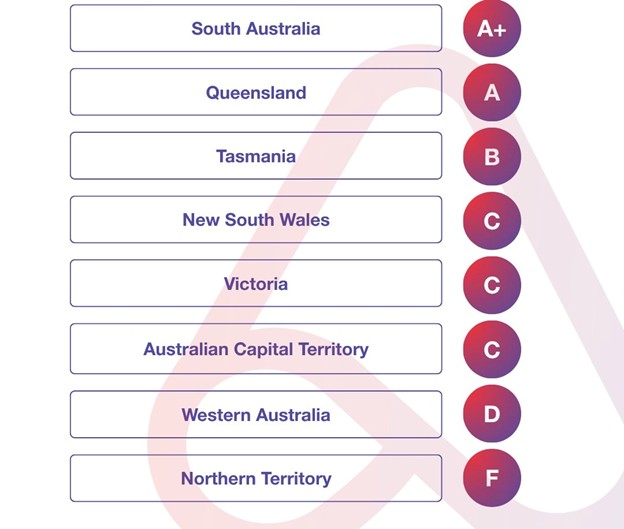
There are differing views, as to the merits of a national approach to tobacco control legislation in a federation. Some contend that a State-by-State approach encourages best practice while providing an opportunity to shame under-performers.
See, for example, the National Scorecard on State and Territory Progress on Tobacco and Vaping, compiled by the Australian Council on Smoking and Health (ACOSH), which is discussed further here.
Others argue that a national approach creates the risk that the lowest common denominator standard will be adopted.
However, as noted above, Australia not only has legislative power to adopt a national approach, but under the FCTC has an obligation to do so – and do so at a best practice level.
Political considerations
Federal Health Minister Mark Butler MP has made clear that Commonwealth Government policy is not to reduce the current level of tobacco excise – a point recently emphasised by Federal Treasures Jim Chalmers who has expressed a preference for improved compliance.
Also, just at the moment there is a somewhat unique opportunity to obtain a bi-partisan approach to national tobacco licensing legislation in aid of improved compliance with federal tobacco excise.
It was the Opposition Shadow Health Minister, Anne Ruston, who proposed amendments which inserted Chapter 6A into the Public Health (Tobacco and Other Products) Act 2023 (Cth), providing for the creation of an Illicit Tobacco and E-cigarettes Commissioner.
Furthermore, political parties and associated entities in Australia have declined donations from the tobacco industries for many years: the Labor Party has stopped accepting tobacco money since 2004-05 and the Liberal Party ceased doing so from 2014-15.
The National Party still accepts tobacco money but the fiscal imperative to stem the leakage of tobacco excise is currently so great it is doubtful that this would have any influence – if anything, efforts to combat the “black market” in tobacco can only assist law-abiding tobacco companies and others in the legitimate supply chain.
Acknowledgement: Aside from the constitutional underpinning of a national tobacco licensing scheme, this post draws heavily on EM Greenhalgh, MM Scollo, MH Winstanley, Tobacco in Australia: Facts and Issues. Melbourne: Cancer Council Victoria; 2024.
 Sydney Health Law
Leave a comment