

The regulation of vaping and e-cigarettes in Australia underwent significant reform during 2023-2024.
This post, prepared for health law students, traces some of the most significant reforms back to their legislative sources.
Broad overview
Australia’s regulatory framework for vaping has three components.
First, vaping goods are regulated under the Therapeutic Goods Act 1989 (Cth), under changes introduced by the Therapeutic Goods and Other Legislation Amendment (Vaping Reforms) Act 2024, and by statutory instruments dealing with therapeutic goods.
What is unique about Australia’s regulatory model is that vaping goods have been designated – and are regulated – as therapeutic goods to assist in smoking cessation and treatment of nicotine dependency. Consistent with other therapeutic goods, high levels of control have been imposed, including the requirement that vapes can only be retailed in pharmacies.
Secondly, decisions about the classification of poisons, including nicotine, are contained in a Commonwealth executive instrument called the Poisons Standard. In Australia, poisons are classified into different schedules, and this sets the level of control – or the level of availability – of poisons in each schedule.
However, these classification decisions represent recommendations to the States and Territories (see the “Reader’s Guide” to the Standard, here) to be implemented through State and Territory poisons legislation. Important changes to the scheduling of nicotine in the Poisons Standard were made during 2024.
Where certain conditions are satisfied (ie those stated for nicotine in Schedule 3, including where the concentration of nicotine in the vape or vaping liquid doesn’t exceed 20mg/mL), nicotine vapes can be purchased from a pharmacist without a prescription. Where these conditions are not met, however, the listing of nicotine under Schedule 4 means that a person must first obtain a prescription for nicotine vapes from a medical practitioner before it can be filled by a pharmacist.
At the time of writing, NSW is in the process of updating its poisons legislation and most of the Medicines, Poisons and Therapeutic Goods Act 2022 (NSW) has not yet come into operation. The older Poisons and Therapeutic Goods Act 1966 (NSW) continues to apply. Both Acts provide that Commonwealth therapeutic goods laws, including the Therapeutic Goods Act 1989 and all regulations and determinations made under it, apply as a law of NSW (see Part 4A of the 1966 Act, and Chapter 4 of the 2022 Act).
As part of Commonwealth/State/Territory efforts to control the black market in vapes, the NSW Parliament has introduced – into both Acts – a number of specific, vaping-related offences, modelled on those in the Therapeutic Goods Act, which carry substantial penalties (see Part 3A of the 1966 Act, and Chapter 3A of the 2022 Act).
Thirdly, e-cigarettes are subject to some of the controls found in both Commonwealth, and State and Territory, tobacco control laws. There has been significant reform of tobacco control legislation recently, including, at Commonwealth level, through the Public Health (Tobacco and Other Products) Act 2023 (Cth), which modernises and consolidates federal tobacco controls that previously existed in several different Acts.
Important reforms have also been made in NSW, through amendments to the Public Health (Tobacco) Act 2008 (NSW). These include a new retail tobacco licensing scheme not yet in operation at the time of writing: see here.
As I said, it’s been a busy couple of years for the regulation of tobacco and vaping products in Australia.
This post focuses on selected aspects of the first regulatory component above: regulation of vapes under the Therapeutic Goods Act (“TG Act”). It discusses legislative requirements in detail (you’ve been warned) and may be of interest to readers wanting to become more familiar with the legislative basis for Australia’s controls on vapes and e-cigarettes. Some topics are omitted, including controls on domestic manufacturing of vaping goods, as well as advertising controls on vapes under the TG Act.
Australia is now facing a federal election and the Coalition has promised to wind back controls on vapes, taxing them and permitting them to be sold in supermarkets and convenience stores: see here and here.
If the Coalition wins the election it remains to be seen whether it will have a majority in the Senate in order to repeal legislation.

Context of Australia’s vaping law reforms
Australia’s approach to vaping regulation seeks to restrict the availability of vapes, especially to teenagers and adolescents, while providing a pathway for smokers who wish to use them to quit smoking or to manage nicotine addiction: see here (pp 4, 8-9).
Nicotine vapes can be lawfully sold in Australia, in pharmacies and/or on prescription.
Asserting that vapes are “prohibited” sounds dramatic, but is a rhetorical device used by vaping advocates who falsely equate controls on availability with the prohibition era. Prescription medicines are not “prohibited”, nor are vapes. People can access them, if they wish, to assist in quitting smoking and/or managing nicotine dependence.
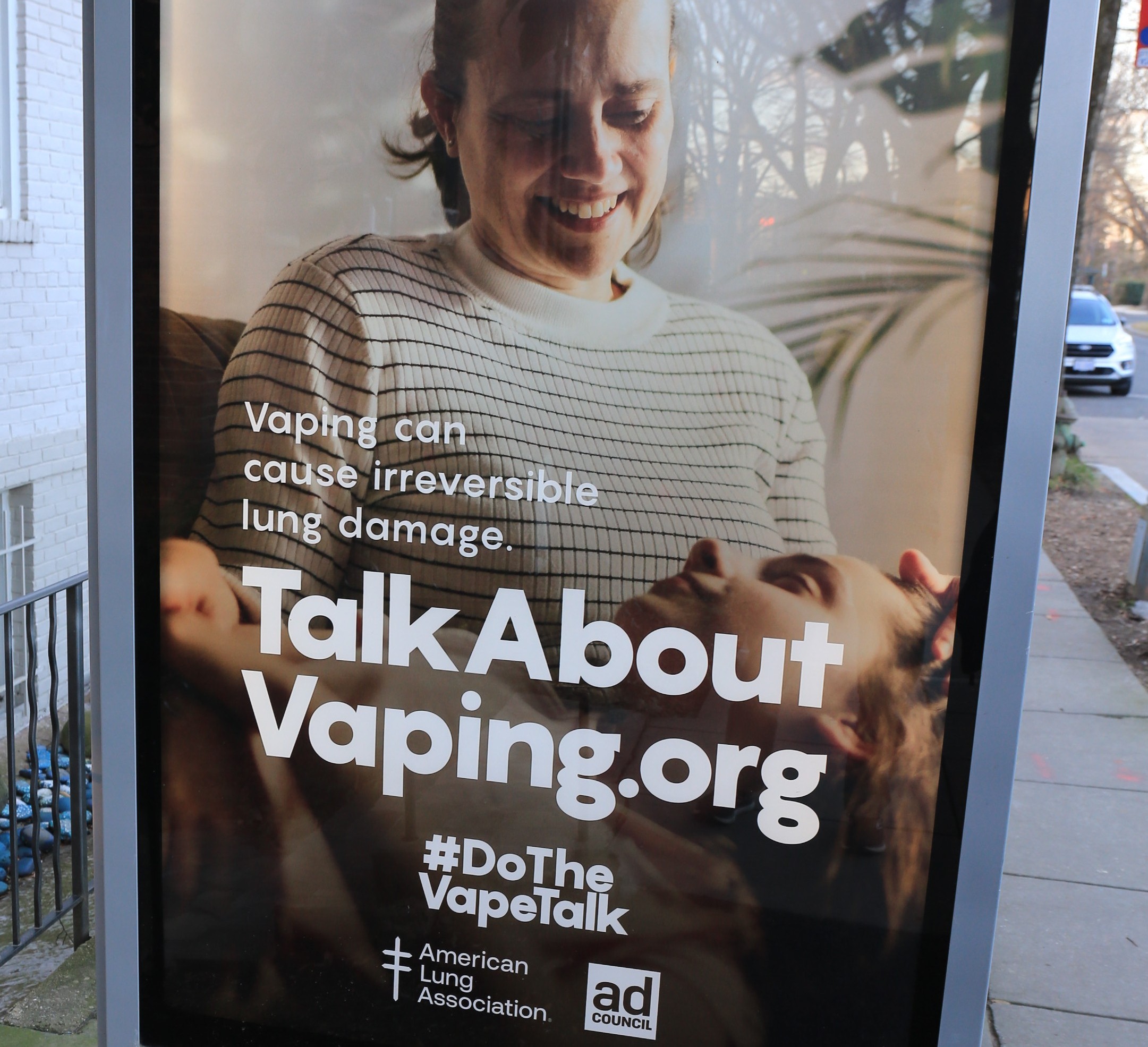
In Australia, e-cigarette use is concentrated in young people. Among persons aged 60-69 in Australia in 2022-23, only 1.6% were currently using e-cigarettes.
Yet according to the National Drug Strategy Household Survey 2022-23, carried out by the Australian Institute of Health and Welfare, current e-cigarette use among persons aged 14-17 years increased 5-fold between 2019 and 2022-23, from 1.8% to 9.7%.
A study by Watts and colleagues found that in 2021, among a representative sample of 14-17 year-olds in NSW, one third had tried e-cigarettes.
This study is significant because the researchers found that those who had ever tried vaping were 18 times more likely to try smoking than those who had never tried vaping.
Another study of 5114 adolescents aged 12-17, published in 2024, found that those who had ever vaped where nearly 5 times more likely to have tried smoking, compared to those who had never vaped.
However, 12-year olds who had tried vaping were 29 times more likely to initiate smoking, and 13-year olds who had tried vaping were 12 times more likely. See here for discussion.
These studies support the “gateway thesis” that vaping is a gateway to nicotine addiction and smoking among youth.
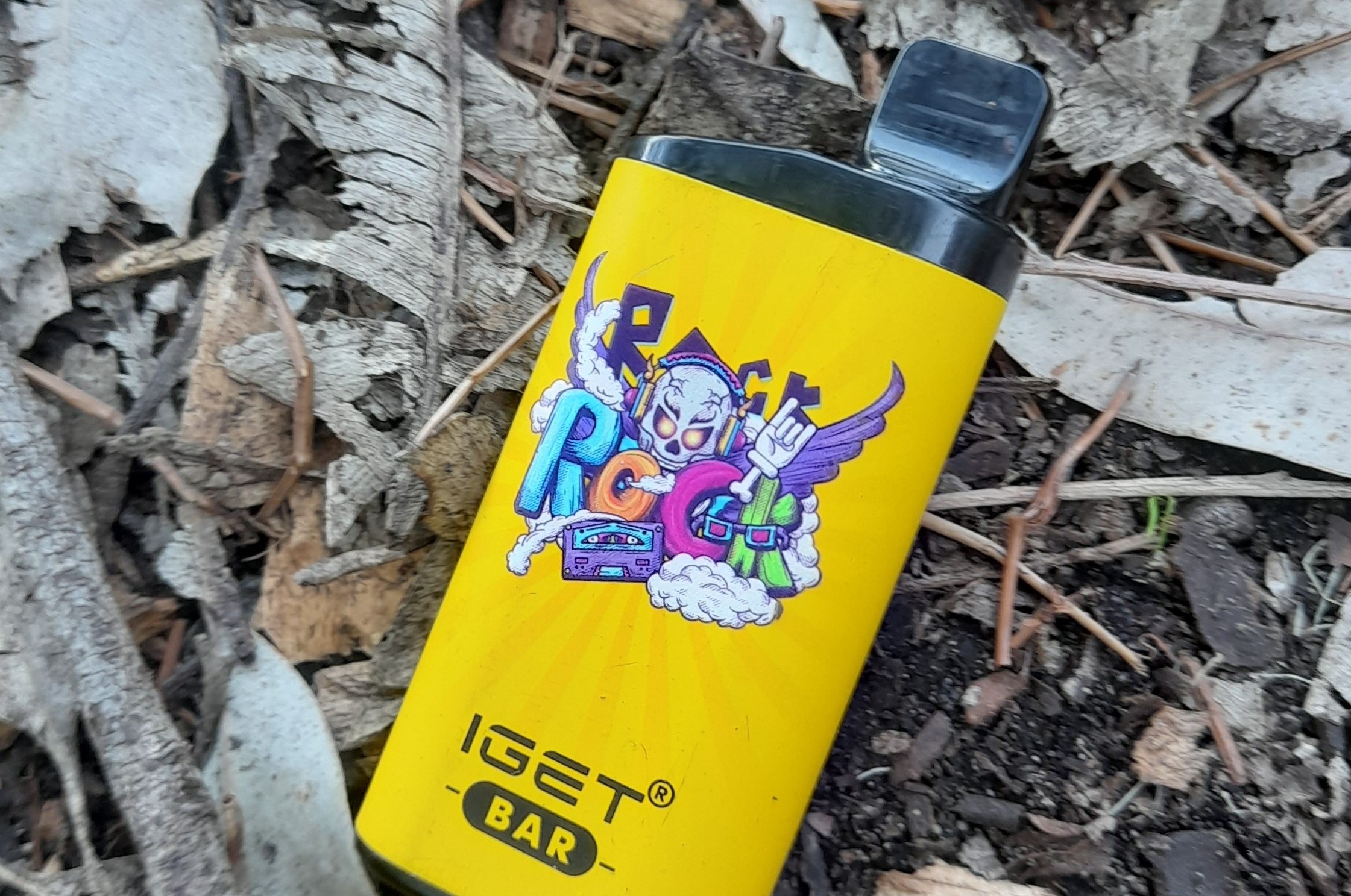
Another important contextual feature of Australia’s vaping reforms is the presence of unregulated chemicals in black market vapes. See, for example, here, and here.
Accordingly, Australia’s vaping reforms seek to resist the creation of a new generation of nicotine-dependent youth, to provide access to vapes as a quit smoking aid, and – through regulation – to moderate the harms caused by vapes sold through lawful channels.

Source: https://www.health.gov.au/news/new-national-campaign-launched-to-help-young-people-quit-vaping-0
TG Act Chapter 4A
The Therapeutic Goods and Other Legislation Amendment (Vaping Reforms) Act 2024 amended the Therapeutic Goods Act 1989 (Cth) [hereafter “TG Act”] by adding Chapter 4A, dealing with vaping goods, into the principal Act.
Chapter 4A of the TG Act creates offences for the importation of vaping goods into Australia, subject to exceptions (s 41Q), as well as for the manufacture and supply of vaping goods, subject to exceptions (s 41QA and s 41QB).
There are also offences for the possession of at least a commercial quantity of vaping goods, and for possession by a retailer of less than a commercial quantity of such goods (s 41QC and s 41QD).
“Vaping goods” are defined in s 41P of the Act to mean any of the following:
- a “vaping substance”, which includes nicotine in solution or any other vaping liquid used in a vaping device;
- a “vaping accessory”, which includes any cartridge, capsule or pod used in a vaping device (which encloses the “vaping substance”);
- a “vaping device”, which refers to the hardware intended to release aerosol for inhalation by the user.
The fact that the definition of a “vaping substance” doesn’t only refer to a vaping liquid containing nicotine means that both nicotine and non-nicotine vapes are caught by the new regulatory scheme.
This is a necessary reform, given the frequent mis-labeling of vapes, whether by labelling nicotine vapes as “nicotine free”, or by removing any mention of nicotine in packaging.
Import controls: overview
Section 41Q of the TG Act introduces a number of criminal and civil offences for importing vaping goods in Australia.
However, no offence is committed under the Act “if the importation of the vaping goods is not prohibited under the Customs Act 1901”: see s 41Q(5).
Section 5A of the Customs (Prohibited Imports) Regulations 1956 (Cth) sets out the exceptions that need to be satisfied in order for vaping goods to be lawfully imported in Australia.
An importer must firstly hold a licence to import the vaping goods into Australia granted by a prescribed authority (which is the Office of Drug Control, or ODC), and secondly, the importer must have written permission from ODC to import the vaping goods, which is produced to the Collector of Customs: s 5A(1)(a).
Importation of vaping goods through the post is prohibited: s 5A(1)(c).
There is a traveller’s exemption in s 5A(2) which allows a traveller on board a ship or aircraft to bring no more than 2 vapes, 20 pods or cartridges and 200ml vape liquid into the country, provided they are “for use in connection with the treatment of the first person” (or someone under their care) as distinct from being, presumably, simply for recreational purposes.
Also, under s 5A(5) of the Customs (Prohibited Imports) Regulations, the Minister can approve the importation of vaping goods into Australia by legislative instrument. The Customs (Prohibited Imports) (Vaping Goods) Approval 2023, made by the Minister under s 5A(5), approves the importation of vaping goods by a person responsible for medical treatment of either:
- members of a group of persons visiting Australia to participate in a national or international sporting event;
- members of the military of another country visiting Australia for military training;
- members of a group of visiting foreign dignitaries that includes the Head of State or Head of Government and senior government officials.
These exceptions aside, an importer of vaping goods must apply to ODC for an import licence and, secondly, an import permit.
Import licence
Under s 5A(7) of the Customs (Prohibited Imports) Regulations, the ODC can’t grant an import licence for disposable vapes – unless it is for medical or scientific research.
This is part of the legislative basis for Australia’s import ban on disposable vapes. Under s 5A(1), imports of all vaping goods are prohibited without a licence, and no license for disposable vapes can be granted unless it is for medical or scientific research.
Under s 5A(17), any import permit for disposable vapes is also subject to the condition that “the vape must only be used for the purposes of supply or use for medical or scientific research”.
On the other hand, provided they are not disposable vapes, vaping goods may be imported “for the purposes of manufacture and supply as part of the applicant’s business”: s 5A(7)(b)(i).
Staying with s 5A(7): in Australia, only businesses, rather than individual consumers, can import vapes, and the business must have an ABN (Australian Business Number) and be registered for GST (Goods & Services Tax). The importing business must also satisfy any licence or other approval requirements that arise under State or Territory law: see s 5A(7)(e).
Import permit
Once the importer has a licence to import vaping goods, they can seek an import permit.
The requirements for an import permit are set out in s 5A(12)-(16). These complex provisions set out several pathways for the lawful importation of vaping goods.
Section 5A(12) provides that in the absence of importation that is authorised under a legislative instrument made by the Secretary (as to which, see s 5A(12)(b)(iv)-(v)), the ODC cannot grant an import permit unless the vaping goods are:
- included in the Australian Register of Therapeutic Goods (ARTG) maintained under the Therapeutic Goods Act 1989 (Cth) (s 5A(12)(b)(i)), or, alternatively
- they are imported for the purposes of medical or scientific research (s 5A(12)(b)(iii)), or, alternatively
- (in the case of non-cannabis vaping goods), the vaping goods meet the notification requirements set out in s 5A(13): see s 5A(12)(b)(ii).
Pausing for a moment: vaping goods are referred to and are regulated as “therapeutic goods” under the TG Act: see Therapeutic Goods (Determined Goods) Determination 2024.
On the other hand, the Therapeutic Goods Administration advises that there are “currently no vapes for smoking cessation or the management of nicotine dependence included in the Australian Register of Therapeutic Goods”.
If we also leave aside the medical research pathway, then in order for the Office of Drug Control to grant an import permit, s 5A(12)(b) states that the importer must meet all the requirements set out in a 5A(13).

Sponsor notice and notified vape list
Section 5A(13) of the Customs (Prohibited Imports) Regulations 1956 (Cth) provides a pathway for lawful importation of “therapeutic” vaping goods where a sponsor gives a “sponsor notice” that meets the requirements in ss 13. Under s 3 of the TG Act, a sponsor will be either an importer or a manufacturer of goods, or someone who arranges for importation or for supply.
The sponsor notice is a self-declaration of compliance with applicable legal requirements and must be made before the goods are imported, or before they are supplied in Australia, following domestic manufacture. The process is explained here.
TGA is keeping a list of “vaping substances, vaping devices, vaping kits and vaping accessories” that have been notified by sponsors as complying with quality standards and legal requirements, called the Notified Vape List.
These lists – which are based on self-declaration by sponsors – are intended to assist pharmacists to ensure that they only stock complying goods, and to assist authorised prescribers, to ensure that they only prescribe compliant vaping goods to patients.
Sponsor notices: core requirements
Section 5A(13)(b) of the Customs (Prohibited Imports) Regulations 1956 (Cth) imposes separate notification requirements for:
(1) therapeutic vaping devices and accessories, and
(2) therapeutic vaping substances or accessories, vaping kits or goods in a therapeutic vaping pack, as follows:
| Notification requirements for therapeutic vaping devices and accessories: Part 2 of schedule 4 of the Therapeutic Goods (Medical Devices) Regulations 2002 [specifically, conditions specified under items 2.17 & 2.18] | Notification requirements for therapeutic vaping substances or accessories, vaping kits or goods in a therapeutic vaping pack: Schedule 5A of the Therapeutic Goods Regulations 1990 [specifically, conditions specified under items 15 & 16] |
A separate sponsor notice is required for each “separate and distinct vaping substance or vaping device type”: see here.
This post highlights two core notification requirements.
Firstly, indications:
In the case of a therapeutic vaping device or device accessory, the Regulations referred to in s 5A(13)(b) require the sponsor to give notice to the Secretary that the device is intended only to contain a “therapeutic vaping substance whose only indications are use for smoking cessation or the management of nicotine dependence”: see Therapeutic Goods (Medical Devices) Regulations 2002, Schedule 4, Part 2, item 2.17(b)(i).
Similarly, in the case of therapeutic vaping substances, substance accessories, a therapeutic vaping kit or goods in a therapeutic vaping pack, the sponsor must give notice to the Secretary that the only indications of the goods are use for “smoking cessation or the management of nicotine dependence”: see Therapeutic Goods Regulations 1990, Schedule 5A, item 15(c).
Australian legislation doesn’t permit the importation of vapes to supply a market for recreational nicotine use. Rather, it approves importation of therapeutic vaping goods for smoking cessation or management of nicotine dependence.
Secondly, compliance with applicable product standards:
Prior to importing or supplying the goods, a sponsor must also give notice that the vaping goods comply with applicable product standards: see item 2.17(b)(ii), in
Schedule 4, Part 2 of the “Medical Device Regulations”, and item 15(e)(i), in Schedule 5A of the “Therapeutic Goods Regulations”.
Different product standards apply to the two categories of vaping goods.
In the case of therapeutic vaping devices or therapeutic vaping accessories, the sponsor must give notice of compliance with the Essential Principles: see item 2.17(b)(ii).
The essential principles are requirements for the safety and performance of medical devices: see ss 41C-41CA of the TG Act. The essential principles are set out in Schedule 1 of the “Medical Device Regulations”.
Non-compliance with the Essential Principles may be a criminal offence or contravene a civil penalty provision, unless the Secretary has consented to the importation or supply: see ss 41MA-41MAA of the TG Act.
However, under s 41CB of the TG Act, the Minister may, by legislative instrument, determine a “medical device standard” which may substitute for compliance with (specified parts of) the Essential Principles.
The Minister has, in fact, done this. The standard set out in Schedule 1 of the Therapeutic Goods (Medical Device Standard – Therapeutic Vaping Devices) Order 2023 (“MDSO”), made by the Minister under s 41CB(1) of the TG Act, will be treated as complying with the essential principles: see s 7(2) of the Order.
In summary: a sponsor importing therapeutic vaping devices must give notice of compliance with either the Essential Principles or the MDSO referred to above.
In the case of therapeutic vaping substances or therapeutic vaping substance accessories, therapeutic vaping kits or goods in a therapeutic vaping pack, the applicable standard that the sponsor must give notice of compliance with is the Therapeutic Goods (Standard for Therapeutic Vaping Goods) (TGO 110) Order 2021 (“TGO 110”).
Section 10 of the TG Act authorises the Minister to make a legislative instrument that constitutes a standard for a class of therapeutic goods identified in the order. The Minister has done this with TGO 110.
TGO 110 applies to “unapproved” therapeutic vaping goods: it does not apply to “registered goods” that have been included in the Australian Register of Therapeutic Goods (although there are currently no therapeutic vapes included in the Register).
“TGO 110”
The requirements imposed by TGO 110 play an important role in reducing some of the public health risks of vaping products, including by ensuring that they are not presented as recreational nicotine products.
However, this does not mean that TGA regards compliant vaping goods as safe or free from health risks.
Six points are worth emphasising.
Firstly, TGO 110 provides that “relevant goods” must not “be in any way attractive to children or adolescents” (s 7(1)(a)); and may not imply, amongst other things that the goods have any health benefits, or that they are safe and without harm or side effects: s 7(1)(b).
S 7 also prohibits anything that would exaggerate the performance of the goods, and anything that would encourage inappropriate or excessive use.
Secondly, TGO 110 regulates ingredients.
It requires the nicotine in a therapeutic vaping substance (a vaping fluid) in base or salt form to be no more than 50mg/mL: s 10(2). Further, the concentration of nicotine in a therapeutic vaping substance must come within 90%-110% of its stated consent: s 10(3).
Active ingredients: Nicotine is the only permitted “active ingredient” in a therapeutic vaping substance; that is, the only permitted ingredient that is responsible for the “physiological or pharmacological action” of the vaping substance: s 19(1).
Permitted ingredients: S 11 of TGO 110 restricts the ingredients that can be used in a therapeutic vaping substance. There are only 5 permitted ingredients, set out in Schedule 1: glycerol, nicotine, propylene glycol, water, and either menthol, mint or tobacco flavour.
Column 3 of Schedule 1 also prohibits a number of other flavouring agents.
Separate from prohibited ingredients, is a list of restricted ingredients. Section 12 and Schedule 2 of TGO 110 set out an additional list of ingredients that cannot be used in a therapeutic vaping substance unless the relevant ingredient falls below the prescribed limit.
Thirdly, flavours. TGO 110 s 13 contains an additional provision that restricts or limits the flavours in a therapeutic vaping substance to mint, menthol of tobacco flavour: s 13(1). Combinations of flavours are prohibited: s 13(2).
Fourthly, containers. TGO 110 limits the size of a container for a therapeutic vaping substance to not more than 60ml. This limit applies to re-fillable, open system vapes: s 14(1). It also limits the size of a “therapeutic vaping substance accessory”, which is the pod or cartridge in a closed system vape, to 5ml: s 14(2).
Fifthly, labelling. Part 5 of TGO 110 sets out the prescribed elements of labels on vaping goods.
For example, Section 22 specifies the information that must appear on the main label of a primary pack. A primary pack is the box or carton containing vaping goods. The “main label” of a primary pack, of intermediate packaging and of a container – must (unless restricted by size) have a warning statement that is 30% of the total size of the main label: s 20(1)(a). The warning statement must be black on white and state: “THIS PRODUCT CONTAINS NICOTINE, WHICH IS A HIGHLY ADDICTIVE SUBSTANCE”.
Finally, packaging. A “therapeutic vaping substance” (ie any vaping liquid) or a “therapeutic substance vaping accessory” (ie a cartridge or pod that contains a vaping liquid – in a closed vaping system) must comply with child-resistant packaging requirements. These requirements are set out in s 21, which refers to ss 8-10 of a separate Therapeutic Goods Order, TGO 95.
However, vaping liquids that comply with requirements in Canada, US, UK and NZ also are taken to comply with the child-resistant packaging requirements.

Controls on sale and supply
Section 41QB of the TG Act introduces a number of criminal and civil offences for supplying vaping goods in Australia.
As noted above, these offences apply to both nicotine and non-nicotine vapes.
Possession and Supply Determination (s 41R)
One exception to the offences in s 41QB applies when supply is in accordance with the “Possession and Supply Determination” issued by the Minister under s 41R of the TG Act: see s 41QB(6)(c); s 41QB(7)(f); s 41QB(8)(d).
Most of the exceptions permitting possession (Schedule 1) or possession and supply (Schedule 2) in the Possession and Supply Determination are time-limited and relate to the shutting down of businesses that previously imported, manufactured or supplied vaping goods that are no longer compliant: see here.
However, the TGA has advised that that future determinations made under s 41R “may provide permanent exceptions for possessing and supplying vaping goods” to “support the lawful supply of therapeutic vaping goods for patients seeking to quit smoking or manage their nicotine dependence.”
Consent Granted by the Secretary (ss 41RB-41RC)
Another pathway to lawful supply of vaping goods arises if the business applies for and receives consent from the Secretary (that is, from the Therapeutic Goods Administration) to manufacture, possess or supply vaping goods: see 41RB of the TB Act. The Secretary may give consent under s 41RC, unconditionally or subject to conditions.
Wholesale supply (s 41QB(6)-(8)) and retail supply (s 41QB(9)-(11))
Supply of vaping goods will also be lawful where the requirements in s 41QB(6)-(8) are all met (in relation to wholesale supply), and where the requirements for ss (9)-(11) are all met (in relation to retail supply): see ss (5).
The exceptions set out in s 41QB(6)-(8) and (9)-(11) are complex.
Firstly, let’s discuss s 41QB(6), and s 41QB(9): both will be satisfied where the vaping goods are:
- exempt goods, under regulations made for the purposes of s 18(1) of the TG Act; or
- exempt devices under regulations made for the purposes of s 41HA(1) of the TG Act, and the sponsor has given a notice in compliance with the exemption.
A further requirement is that the goods are not the subject of a determination made by the Secretary that the supply of the goods should cease on public health grounds: see s 41QB(6)(b)(ii), and s 41QB(9)(b)(ii), respectively.
Regulations have been made for the purposes of s 18(1), and for the purposes of s 41HA(1), that exempt specified vaping goods, and therapeutic vaping devices, respectively, where certain conditions are met. This can been seen from clause 7.1(2) of the “Medical Devices Regulations” and from clause 12(2) of the “Therapeutic Goods Regulations”, respectively.
The relevant conditions to be met are found in:
- Part 2 of Schedule 4 of the Therapeutic Goods (Medical Devices) Regulations 2002 (see especially item 2.17) – applicable to therapeutic vaping devices and vaping device accessories); and
- Schedule 5A of the Therapeutic Goods Regulations 1990 [RM1] (see especially item 15) – applicable to therapeutic vaping substances or therapeutic vaping substance accessories, therapeutic vaping kits or goods in a therapeutic vaping pack.
The conditions to be satisfied in order to exempt these categories of vaping goods closely resemble those that sponsors importing vaping goods must meet under the schedules above. This table summarises some of the key requirements.
In circumstances where the requirements are met under s 41QB(6), and/or s 41QB(9) above, two further sub-sections must still be satisfied.
As far as wholesale supply of vaping goods is concerned, s 41QB(7) will be satisfied where the supplier of the vaping goods:
- holds an import licence and permit under the Customs (Prohibited Imports) Regulations 1956 (s 5A): see s 41QB(7)(1)(a)(i); or
- holds a manufacturing licence under Part 3-3 of the TG Act to carry out a step in the process of manufacture: see s 41QB(7)(b); or
- is a wholesaler authorised under State or Territory law to supply substances included in Schedule 3 of the Poisons Standard (including nicotine): see s 41QB(7)(d); or
- where the Secretary has given a consent under s 41RC(1): see s 41QB(7)(e).
S 41QB(8) will be satisfied where the recipient of the vaping goods:
- holds a licence under Part 3-3 of the TG Act that authorises a step in the process of manufacture of vaping goods: s 41QB(8)(a); or
- is a wholesaler, pharmacist, medical practitioner or nurse practitioner” who is authorised to supply nicotine (Schedule 3 substances under the Poisons Standard) under State or Territory law: s 41QB(8)(b); or
- The Secretary has consented to the supply under s 41RC: s 41QB(8)(c).
Section 41QB(10)-(11) applies more specifically to the (retail) supply of vaping goods by pharmacists, health practitioners and nurse practitioners, and authorises supply to a person (or their carer) for the purposes of smoking cessation or management of their nicotine dependence.
Together, the controls on wholesale and retail supply seek to ensure tight control over the sale of vapes and in particular ensure that vapes may only be supplied to a person with nicotine dependence by a medical or nurse practitioner, or pharmacist.
Offences for possession
In addition to offences for supplying vaping goods, the TG Act contains offences for possessing a commercial quantity of vaping goods (s 41QC) and for possession, by a retailer, of less than a commercial quantity of such goods (s 41QD).
A “commercial quantity” of vaping goods is defined in the Therapeutic Goods Regulations 1990 s 10N as being (from 1 October 2024): 9 vaping devices, 60 vaping accessories (cartridges or pods), or 400ml vaping liquid.
The offences and penalties in s 41QC are scaled according to the extent to which the quantity of vaping goods possessed exceeds a commercial quantity (<100 X; >100 X – <1000 X; >1000 X).
There are a number of exceptions to the offence and civil penalty provisions. These include: :
- Possession for personal use (of less than 5 X a commercial quantity) (s 41QC(11A)); and
- Possession by a person who holds an import licence and permit under the Customs (Prohibited Imports) Regulations 1956, to import the vaping goods (see s 41QC(14)(a)).
- S 41QC(13)(b) also provides an exception when a person has given a sponsor notice and they meet the conditions for supply of exempt vaping devices, or of exempt vaping goods under the regulations.
The conditions for the supply of exempt devices under the Therapeutic Goods (Medical Devices) Regulations 2002 and for the supply of exempt goods under the Therapeutic Goods Regulations 1990 were discussed above.
If a person possesses a commercial quantity of disposable vapes, then no exception will apply, since the conditions for supply of exempt devices under the Therapeutic Goods (Medical Devices) Regulations 2002 do not apply to disposable vaping devices.
This is because the definition of “therapeutic vaping device” in the dictionary of the TG (MD) Regs 2002 excludes a disposable therapeutic vape:
| The dictionary to the TG (MD) Regs 2002 states: therapeutic vaping device means a therapeutic good that is a vaping device, other than: (a) a disposable therapeutic vape (within the meaning of the Therapeutic Goods Regulations 1990); or (b) a therapeutic cannabis vaping device. |
Similarly, if a business or person possesses a commercial quantity of recreational nicotine vapes (that is, non-therapeutic vapes whose indications are not for smoking cessation or treatment of nicotine dependence), then – again – those goods won’t be “exempt goods” under s 41QC(13)(b) of the TG Act.
Penalties
Each of the key penalty provisions in Chapter 4A of the TG Act – those that apply to importing vaping goods in Australia (s 41Q), manufacturing vaping goods in Australia (s 41QA) and supplying vaping goods (s 41QB) are supported by substantial penalties.
The maximum penalty for the main criminal offence provisions is “imprisonment for 7 years or 5,000 penalty units, or both”, while a strict liability offence exists with a penalty of 200 penalty units.
One penalty unit is currently $330, so the maximum financial penalty for the main criminal offence is $1.65 million. These are substantial financial penalties directed at black market suppliers.
Severe penalties also exist under the civil provisions for importing vaping goods in Australia: up to 7,000 penalty units for an individual ($2.3 million) and up to 70,000 penalty units ($23 million) for a corporation). However, there is no risk of imprisonment under the civil penalties.
Black market purchases by individuals
What about an individual consumer who might have purchased a non-compliant vape on the black market?
While there are offences for importation, supply and possession, there are no offences for possession of vapes, by individuals, for personal use (unless one possesses a commercial quantity).
Nor is the act of vaping itself unlawful, unless one is, for example, vaping in a non-smoking area (see definition of “smoke” in the Smoke-free Environment Act 2000 (NSW).
Rather than criminalising the vaper, Australia’s model focuses on the business side of vaping: import, manufacture and supply. The same is true of tobacco control laws generally.
Enforcement tools
In addition to taking criminal and civil proceedings, there are a variety of other regulatory tools that support the enforcement of Australia’s therapeutic goods legislation.
This includes infringement notices, enforceable undertakings (s 42YL) and enforceable directions (s 42YS). An enforceable direction may be given when the Secretary believes on reasonable grounds that a person is not complying with the TG Act and “it is necessary to exercise powers under this Part to protect the health and safety of humans” (s 42YT(1)(b)).
The Secretary’s direction may include a written notice requiring a person to destroy or dispose of goods, or to deliver them to a third party for destruction. Failure to comply with the written direction may constitute either a criminal offence, or attract a civil penalty.
National vaping enforcement framework
The National Vaping Enforcement Framework, agreed to by the Therapeutic Goods Administration, Australian Border Force, Australian Federal Police and all State and Territory health departments and police forces, outlines how “Commonwealth agencies, state and territory health departments and police will work together to enforce the vaping reforms, including establishing operational mechanisms and information sharing to support an interconnected and united approach to enforcement.”
The National Vaping Enforcement Framework is overseen by a multi-jurisdictional group called the National Vaping Working Group, co-chaired by the National Border Force Commissioner and Secretary of NSW Health. It meets regularly and publishes its communiques.
Illicit Tobacco and E-cigarette Commissioner
The national enforcement framework is further supported by the Illicit Tobacco and E-cigarette Commissioner (ITEC). The existence and functions of the ITEC are set out in the main Commonwealth tobacco control statute, the Public Health (Tobacco and Other Products) Act 2023 (Cth).
The Commissioner’s functions, set out in Chapter 6A of the Act, include:
- providing administrative and governance support for the intergovernmental response to illicit tobacco and vaping products;
- developing and implementing national strategies for enforcement of illicit tobacco and e-cigarette laws (s 163C).
While enforcement is carried out co-operatively across all tiers of government, the Australian Border Force, and Australian Federal Police, collect evidence, and bring charges, respectively, under Commonwealth law, while NSW Health and NSW Police, respectively, gather evidence and bring charges under NSW law.
While enforcement is carried out co-operatively across all tiers of government, the Australian Border Force and Australian Federal Police collect evidence, and bring charges under Commonwealth law, while NSW Health and NSW Police, respectively, gather evidence and bring charges under NSW law.
As mentioned above, NSW has introduced a number of offences for supply and possession of vaping goods, modelled on those in the TG Act, which target black market operators (see ss 85B-85D of the 2022 Act, and ss 20-22 of the 1966 Act).

For further information about studying health law at Sydney Law School, see here.
 Sydney Health Law
Leave a comment