This post was written by Neil Francey, Research Affiliate, Sydney Health Law
In an article in The Weekend Australian (13-14 September 2025), Associate Editor Eric Johnston argues that there should be a rethink of tobacco customs and excise duty, due to the scale of illicit trade in tobacco.
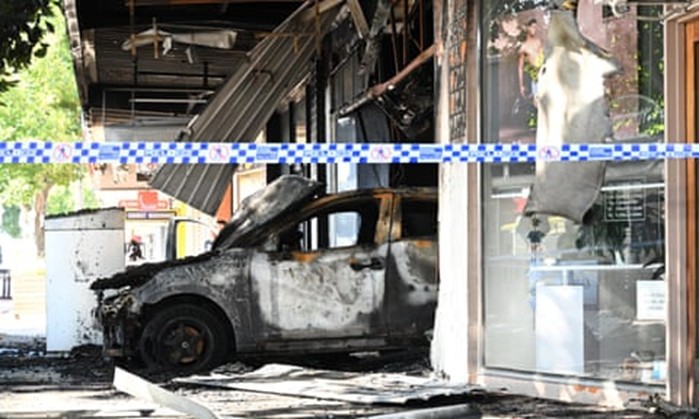
Johnston’s piece was prompted by burnt-out tobacco retail stores in Melbourne – firebombed as part of a “turf war” between criminal gangs fighting over territory. He notes that these attacks are steadily spreading nationwide, citing multiple arson attacks this year in NSW, Brisbane and the Gold Coast.
Johnston focuses on the decline in tobacco revenue by the federal government: from a high of $16.3bn in 2020 to just $7.4bn in 2025, comparing this latter figure with the $5.4 bn collected in tobacco excise in 2011, despite several significant tobacco tax rises in the intervening time.

Without expressly saying so, Johnston seems to imply that tobacco taxes should be reduced, endorsing NSW Premier Minns’ call for lower tobacco excise as black market cigarette sales boom. Minns has questioned whether strengthening enforcement is the best use of NSW police time and resources in circumstances where the Federal Government is not collecting the high levels of tax that it once did, due to the scale of the black market. Any reduction in tobacco excise is opposed by the federal government, a position endorsed by experts – albeit for different reasons.
Premier Minns has also complained about inadequate Commonwealth funding for hospitals, highlighting growing tension between Canberra and the States as pressure on both the NDIS and public hospitals continues to build.
Johnston illustrates his argument by reference to the Laffer curve, which essentially demonstrates that there is a relationship between rates of taxation and the resulting levels of government revenue. Although revenue increases as the tax increases, there is a “tipping point” after which revenue begins to fall.
This is explained in Australia’s most comprehensive treatment of tobacco issues, Tobacco in Australia: Facts and Issues, as follows:
Tobacco (like alcohol) has long been recognized as a harmful and discretionary commodity and therefore a legitimate object of taxation. Equally, it is a fundamental rule of economic theory that increasing (or decreasing) the price of a commodity reduces (or increases) demand for that commodity.
“Thus, price elasticity of demand refers to the extent to which [consumption] of a product falls or rises after increases or decreases in its price. If price elasticity of demand for a product were very low—that is, if it were inelastic—then demand would fall or rise only slightly in response to price changes.”
So:
“While demand for tobacco products is not as elastic as demand for many other consumer products, research has consistently demonstrated that increases in the price of tobacco products are followed by moderate falls in both the percentage of people smoking and the amount or number of tobacco products that remaining smokers consume. The percentage of people smoking declines because tax increases discourage non-users from starting, encourage users to quit and, also very importantly, discourage former smokers from starting again. Because increases in tobacco taxes result in higher tobacco prices across the whole population, the effect of even small resulting reductions in tobacco use can be very large across the whole population.” [For further discussion, see here].

The flaw in the response of Australian governments to illicit tobacco has been to under-estimate the effects of tax evasion – extending to the firebombing of tobacco retail stores, and standover tactics applied against retailers, forcing then to sell illicit tobacco.
The Federal Government has gone some way towards strengthening enforcement by creating an Illicit Tobacco and E-cigarette Commissioner, adopting amendments proposed by Opposition Health Spokesperson, Senator Anne Ruston. However, the solution to the illicit trade in tobacco and e-cigarettes is not as simplistic as decreasing taxes or improving State and Territory enforcement.
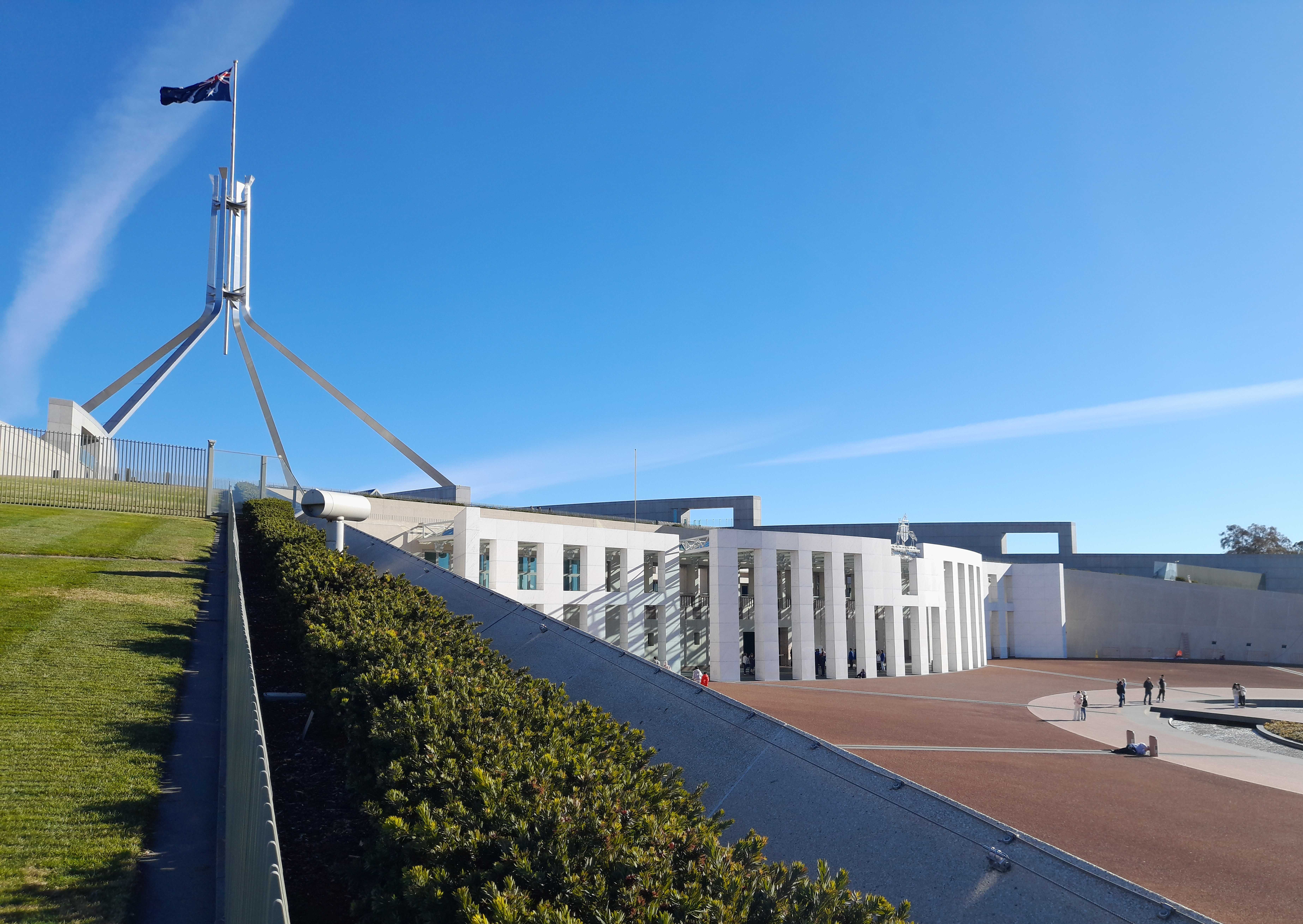
For a start, there is a disconnect between the entity benefiting from tobacco customs and excise (the Commonwealth) and the entities responsible for expending their resources to clamp down on sales of tobacco that has been smuggled into the country (the police forces of the States). As argued in a separate post, a single national tobacco licensing scheme, if implemented by the Commonwealth, could impose exacting licensing requirements uniformly across Australia and eliminate “weak jurisdictions” where penalties for supply of illicit tobacco remain low (eg Western Australia).
Significant and sustained investment of law enforcement resources will be needed to reduce lawlessness in the supply chain for tobacco, assisted by a reduction in the number of retail tobacco outlets, as argued here.
The more significant problem, however, is that tobacco companies do not yet currently pay for the full cost of the harm caused by their products, and until they are made to be responsible for that full cost, demand for smuggled tobacco will continue. How can this best be achieved?
In this respect an examination of the history of the tobacco market worldwide is instructive: The current state of firebombing of black market tobacco stores in Australia bears a resemblance to Laffer’s inverted U curve in reverse as it operated in the Black Patch Tobacco Wars in the U.S. around the turn of the 20th century (1904–1909).
These “wars” occurred in response to deflated prices for tobacco paid by the American Tobacco Company (owned by James B Duke) as a result of its dominant market position. Duke’s market dominance arose from his success in minimizing the costs of production by exploiting the Bonsack cigarette rolling machine.
During this time, an association of tobacco growers was formed with the intent of controlling their own product and pricing by banding together. Many of these growers resorted to violence and vigilante practices – destroying crops, machinery, livestock, and tobacco warehouses, even capturing whole towns.
Something similar occurred when Duke sought to enter the U.K. market. In 1901, Duke acquired Ogden’s Ltd (Ogden’s), a sizeable Liverpool-based tobacco company, with a plan to slash prices and flood the U.K. market with cheap machine-manufactured cigarettes, buying up competitors along the way.
Heads of the thirteen ranking British tobacco companies gathered for six days in Birmingham to devise a response. They each pledged to one another that they would not sell to the U.S. and, under the leadership of Sir William Wills, agreed to pool their resources to create a new amalgam – the Imperial Tobacco Company of Great Britain and Ireland Ltd (Imperial).

When Imperial threatened to enter the US market, Duke agreed to a deal that involved American selling Ogden’s to Imperial, American and Imperial each agreeing not to sell in each other’s existing markets, and a new joint venture – British American Tobacco Company (BAT) – established to market to the rest of the world. American held two-thirds of the shares of this new company, and Duke was Chairman of the Board.
Ultimately, the monopoly enjoyed by Duke’s American Tobacco Company was broken up in a U.S. Supreme Court anti-trust suit, and the bulk of American’s assets were divided among the four leading American tobacco companies in order to promote competition.
During the twentieth century, a new competitor, Philip Morris, rose to prominence in the US tobacco market, as chronicled in Richard Kluger’s Pulitzer Prize-winning book Ashes to Ashes: America’s Hundred-Year Cigarette War, the Public Health, and the Unabashed Triumph of Philip Morris.
The emergence of large American and UK tobacco companies also explains the nature of Australia’s tobacco market:
- Imperial had a presence in Australia through its subsidiary W.D. & H.O. Wills (Australia) Limited (Wills). Wills was first registered as a corporation in 1914, subsequently becoming a BAT company following the merger of BAT and Rothmans in 1999.
- Philip Morris has had a presence in Australia since the registration of Philip Morris (Australia) Limited in 1954.
- Imperial has had a presence in its own right since the registration of its subsidiary, Imperial Tobacco Australia Limited, following the merger of BAT and Rothmans in 1999.

In 1950, when a link between smoking and lung cancer was first established in the U.S. and the U.K., all major US tobacco companies met at the Plaza Hotel in New York City and agreed on a public relations strategy to discredit the emerging scientific evidence. They established the spurious Tobacco Industry Research Committee (TIRC), ostensibly to conduct “independent” research into claimed harm from tobacco, a development publicly announced in a now infamous advertisement headed A Frank Statement to Cigarette Smokers published in 448 newspapers across America.
This led to a “Not Yet Proven” campaign of distraction, false reassurance and confected confusion doubtless adopted outside the United States through related companies, including the subsidiaries of Imperial and Philip Morris in Australia.

In 1977, when concern developed over harm from secondhand smoke, seven of the Western world’s major tobacco companies met discreetly outside Bath, in the U.K., in order to develop a defensive smoking and health strategy. Code-named “Operation Berkshire”, its purpose was to cloud the link between smoking and diseases, especially cancer and heart disease, also reinforcing the quarter century dispute with regards to lung cancer.
Another aspect of the marketing of tobacco involves the exploitation of the addictive properties of nicotine. In a July 1963 report, Addison Yeaman, General Counsel of BAT subsidiary Brown & Williamson Tobacco Corporation, proposed strategies to enable the company to continue selling cigarettes, despite growing evidence linking tobacco with diseases. This document contains the famous quote:
“Moreover, nicotine is addictive…We are, then, in the business of selling nicotine, an addictive drug…”
Yeaman recommended the establishment of a new “lavishly funded” research organisation to give the appearance of concern about lung cancer while placating the customer with innovative product designs to remove toxins:
“We challenge those charges [that smoking causes illness] and we have assumed our obligation to determine their truth or falsity by creating the new Tobacco Research Foundation [replacing the TIRC]. In the mean time (we say) here is our triple, or quadruple or quintuple filter, capable of removing whatever constituent of smoke is currently suspect while delivering full flavor — and incidentally– a nice jolt of nicotine”.
This historical background lays the groundwork for considering two other basic tenets of economic theory:
Perfect information is a concept in economics that describes a situation where consumers in a market know all relevant information. In his 1996 book, The Good Society, the renowned economic John Kenneth Galbraith said: “The economic system operates only within firm rules of behaviour. The first is common honesty – the truth must – be conveyed as essential information”.
Cost-of-production theory of value is the economic theory that the price of (for example) goods should reflect the total sum of the cost of production. Where goods are defective or cause harm, the price of the goods extends to the liability of the manufacturer for the harm caused by the goods, and to any other liabilities that may arise from the way the product is marketed. The cost of the goods includes the costs of defending legal claims, settlement payouts and any court-ordered damages.
For decades, the tobacco industry has unjustly enriched itself while distracting and confusing smokers about the harms and addictiveness of their product. The industry has not been forced to bear the full costs of the harm caused by their product. These costs have either been borne by smokers themselves, and by taxpayers when smokers get sick and receive publicly-funded or subsidized health care.
The tobacco industry, including Australian tobacco companies, has a long history of distorting the truth about the harmful effects of smoking through their “Not Yet Proven” approach, and by unconscionably exploiting the addictiveness of nicotine.
By contrast, in the United States, during the 1990s, the Attorneys General of the States sued the US tobacco companies for the cost of medical treatment caused by smoking. Forty-six States settled their litigation in what is known as the Master Settlement Agreement (MSA). In addition to agreeing to release vast stores of internal industry documents, U.S. tobacco companies agreed to make payments to the States in perpetuity. The value of these payments was expected to reach USD 206 billion by 2025.
The MSA resulted in an increase in the retail price of a pack of cigarettes, doubtless due to the fact that U.S. tobacco companies factored their obligations under the terms of settlement into the cost of production.
No such litigation has ever been conducted, or settlement reached, in Australia, and so tobacco companies operating in Australia are yet to compensate taxpayers for the egregious costs of tobacco-related diseases.
However, any consideration of litigation in Australia should take account of the mixed assessments of the impact of the MSA on the US tobacco industry: see here, here and here.
Australian federal Treasurer, Jim Chalmers, is on record as saying:
“There’s two ways that we get tobacco excise down. One’s a good way and one’s a bad way. The good way is more people give up [smoking], that’s a good thing. The bad way is more people avoid the excise, and there is a problem. “.
Currently, while levying tobacco taxes is the sole province of the Commonwealth, and smuggled tobacco impacts Commonwealth revenue, it is the States which bear the greater share of the burden of medical and hospital costs of dealing with smoking caused disease. These costs have never been factored into the cost of production because the tobacco industry has been so successful in shifting these costs onto smokers, and State health systems.
If the Australian States were to prosecute litigation against tobacco companies, in a way similar to the U.S. State Attorneys General litigation in the 1990s, while ensuring that any settlement or judgment monies were directed towards tobacco control measures (including reducing the cost of quitting aids), then it is possible that:
- The price of a pack of legal cigarettes would rise;
- Smokers would find it easier to quit, leading to a decline in smoking prevalence, while
- The federal government would welcome any consequential decline in tobacco tax revenue.

As a signatory to the WHO Framework Convention on Tobacco Control (FCTC), Australia has an obligation to consider litigation as a means of reducing tobacco addiction, as confirmed in a recently published Report by the Expert Group on Implementation of Article 19 of the FCTC on Liability.
Lest there be any concerns that successful litigation against the tobacco industry would only further increase the price of legal cigarettes, thereby fueling the black market, if tobacco companies were ordered to pay the costs of providing services to enable smokers to become unaddicted, demand for tobacco products would fall, irrespective of whether they were offered for sale in the legal market, or the black market.
Ultimately, it is only by addressing demand – supporting and incentivising smokers to overcome nicotine addiction – that demand for tobacco will fall to the point that substantial illicit trade will not be viable.
NOTE: Johnston’s piece was under a banner “SMOKES, FIRE AND A FAILED EXCISE”, a banner reused in another article in The Weekend Australian, “Butler denies tax rise driving tobacco black market “of 27-28 September and yet another “Criminal gangs turn to extortion as blackmarket tobacco war intensifies” of 4-5 October.
News Limited, publisher of The Australian, and The Weekend Australian, has long had an association with the traditional tobacco industry.
 Sydney Health Law
Leave a comment